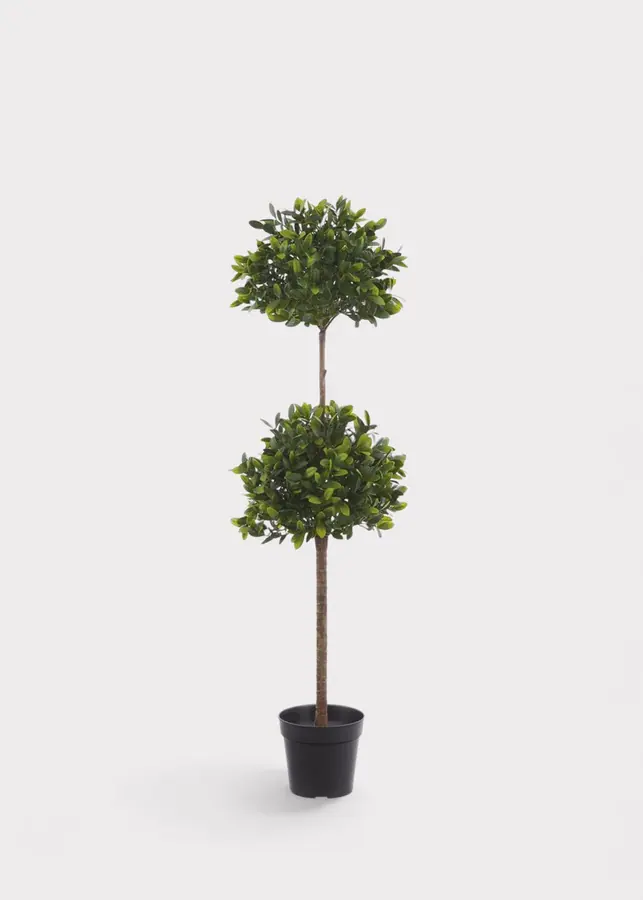
Measure the usable space
Record ceiling height, the distance to nearby furniture and the narrowest part of the walkway. A catalog’s height is only one dimension. The branch spread may be the limiting factor in a bedroom corner or beside a sofa. Mark the proposed base on the floor and use a tape measure to visualize the canopy at its widest point.
Ask what the measurements include
Confirm whether the listed height includes the supplied pot and whether width is measured after the branches have been shaped. A shipping carton does not describe the finished silhouette. Ask for a photograph of the exact size beside a clear reference, rather than relying on an image that might show another variant.
Choose the planter after the tree
Compare the nursery pot’s outside dimensions with the decorative planter’s internal opening and base. Check access for positioning the tree and follow the supplier’s guidance for stability. A larger decorative pot may improve the visual proportion, but its appearance alone does not establish whether the tree is securely supported.
Plan the sightlines
Look at the proposed position from the entrance, sofa and nearby seating. Leave room for doors, curtains and cleaning. A tree can frame an empty corner, but should not obscure a light switch or force people to move around the foliage. For a commercial installation, include a photograph and floor measurements in the supplier brief.
Shape it gradually
After unpacking, follow the assembly instructions and work outward in small adjustments. Pause to view the whole silhouette. Avoid forcing a joint that does not move freely. Keep the original packaging until you have checked the item and recorded any transit damage with photographs.
Bring the idea home.
Discover flowers, greenery and trees to make this look your own, or tell us what you are planning.
Explore the collection
Join the conversation.
Have a styling tip or a question? Share it with the community. Comments are reviewed before appearing.